Act 3 – Scene 2: All Kids Doing Great

Act Three/Scene Two of A Complex Apology:  All Kids Doing Great

SCENE TWO:    With both parents happily remaining at home, the Darymple boys prospered.  The youngest Darymple won the Fourth of July Essay contest as a Sixth Grader and got to read his essay at the Como Park Fourth of July Celebration.  It was all about how great America is, specifically mentioning our freedoms, our creativity, and our compassion.  It included a part about how sometimes it seems hard to see how great America is, and how the good things don’t make TV all that much, but he concluded optimistically saying America’s best days were still ahead, that America serves as a beacon of hope to the rest of the world, especially because we can speak our beliefs without being punished, and that we will continue to be a great country so long as we act with compassion.
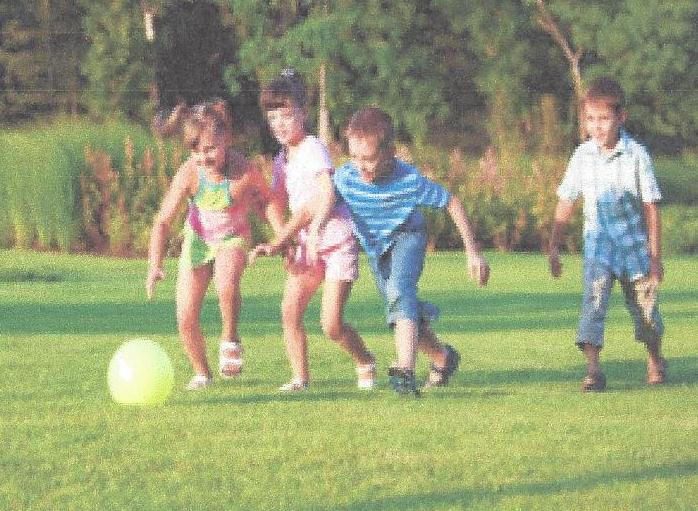
kids at play
Kids at play

Joy and The Doc’s children also prospered.  Their oldest was quite the musical talent, even making it on TV as a teenager.  Maybe best of all was that, with Joy’s help, a group of neighborhood high school kids was successful in starting an Americorps program.  They simply wrote-up what they were already doing and said they could expand it.  What they were doing was earning money from “the neighborhood bank” by doing senior chore services, lawn-mowing, etc., and most importantly, running a great after-school and summer recreation program for the younger kids.

Tomorrow:  Scene Three

Act 3: Back in Utopian St. Paul

Act Three of A Complex Apology:   Back in Utopian Saint Paul

SCENE ONE:    Fast forward to the late 1980s.  You had to figure that the Darymple boys and Joy’s daughters would become expert tobogganists, really good downhill skiiers (right in their front yard), and some of the most popular kids in town.  Meanwhile, the monotony of marriage surfaced surreptitiously with bedroom eyes exchanged across backyard fences and the ladies’ book club taking up a book of the adventures in the science of female desire.  Ms. Darymple simply couldn’t take her mind off how handsome and well-built the guy next door was.

lady Darymple
Mrs. Darymple

One thing led to another and one afternoon while the boys were out playing she found herself asking that handsome fellow to help her move some furniture into the Grandmother Apartment above her garage (recently constructed, yet to be occupied).  A romance ensued and once again an East Como Boulevarder was facing an ethical dilemma wondering if what she was doing was right.  Turns-out it was all serendipitous.

While lady Darymple was having a secret life of great sex, Mr. Darymple was often working late at the office and having his own secret affair.  When they both found out about each other’s unfaithfulness, it saved the marriage!  They found out they still loved each other, they really loved their kids, and that their disagreements and disappointments – many as they were – no longer loomed as important given their separate pursuits of happiness.  Only their closest friends (and a couple of neighbors) knew about their open marriage and how one time even Ms. Darymple invited her overnite beau into the kitchen for breakfast with Mr. Darymple.  No apologies necessary.

Tomorrow:  Scene Two

Act 2 – Scene 2: A Police Murder


Act Two/Scene Two of a Complex Apology:  A Police Murder

It was after the summer of 1968 that her first Fred joined the Black Panther movement and Joy met folks in the Weather Underground.  It was an easy and natural extension of the civil rights movement and anti-war movement.  It was not reneging on a commitment to be anti-violent, but rather a reckoning with the reality of 1960s America, of government-sponsored violence, even shooting college kids on campuses across the country, not to forget 50,000 Americans killed in Viet Nam.

And Joy had a good understanding of justice.  It was watching the Chicago 8 trial, where exercising First Amendment Rights to oppose a war was jiu-jitsued into being charged as a criminal for conspiring to riot and commit mayhem, that Joy felt reminded of the stories she’d read in history class about the Haymarket Riot and Chicago in the 1890s, where innocent men were hung for allegedly orchestrating the murder of a police officer when in fact they were simply leaders of the labor movement who had called a labor rally.  It was the opinion of many that the government had started the shooting at Haymarket Square in 1886, and, with her first-hand experience in Grant Park in 1968, it was now also Joy’s firm opinion that government leaders were indeed capable of instigating violence, of taking the law into their own hands, and that justice was not to be counted on in a court of law.  Wrong, and sad, but true.

Joy had learned well in Civics Class about how necessary it was that America fought a revolutionary war to gain freedom and how important the First Amendment is to preserving freedom.  So it wasn’t anything but with the best of intentions that Joy started hanging with Black Panthers and the Weathermen.

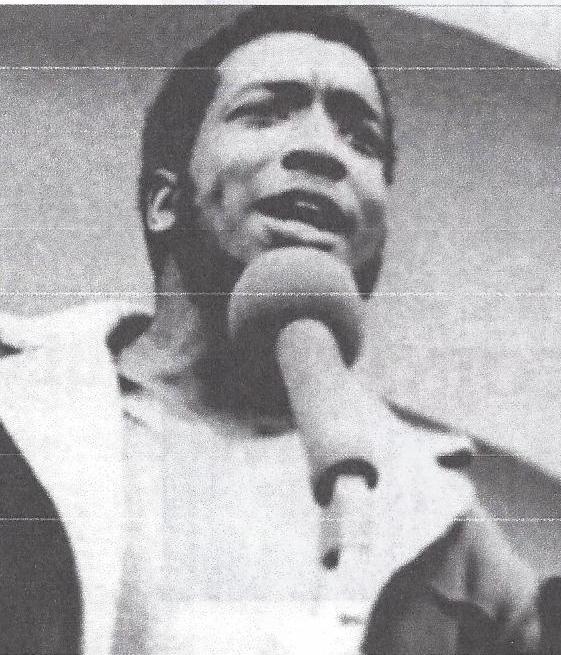
Fred Hampton

After the police executed her first Fred in a raid on a Black Panther headquarters, Joy went to Grant Park to protest the police killing, took the microphone, and said “Now you’ll have to deal with me.”  Shortly after that one of her waitress friends moved to LA to be closer to the acting scene and Joy went along, still furious about the death of Fred.  She took on an assumed identity in Los Angeles and then did several things that led to a life-long struggle with her conscience about whether to apologize for her behavior or stick to her guns that what she did was justifiable.

Tomorrow:  Act Three

Act 2: Joy Before We Knew Her

Act Two of A Complex Apology:  Joy Before We Knew Her

SCENE ONE:    Joy had grown-up in the suburbs of Chicago, a child of the 60s.  Her dad was the local Methodist minister; her mom a school teacher.  Her parents were members of FOR (Freedom of Residence) and genuinely in favor of integration  – even taking Joy with them to join Martin Luther King, Jr., on his civil rights march into lily-white Cicero.  While in college Joy became of the opinion that they had joined FOR as a salve for their own part in the white flight to the suburbs when Joy became school-age.  When the family took the Expressway downtown to go to the Art Museum, or go boating on Lake Michigan, or some such thing, both her parents would explain it was not safe to take the side streets because Black Folks were justifiably angry with White Folks.

In college Joy had taken-up acting and even won a starring role in a local theatre production, but mostly she made money waitressing after college.  She liked the Second City scene.

Also in college she fell in love with a black man.

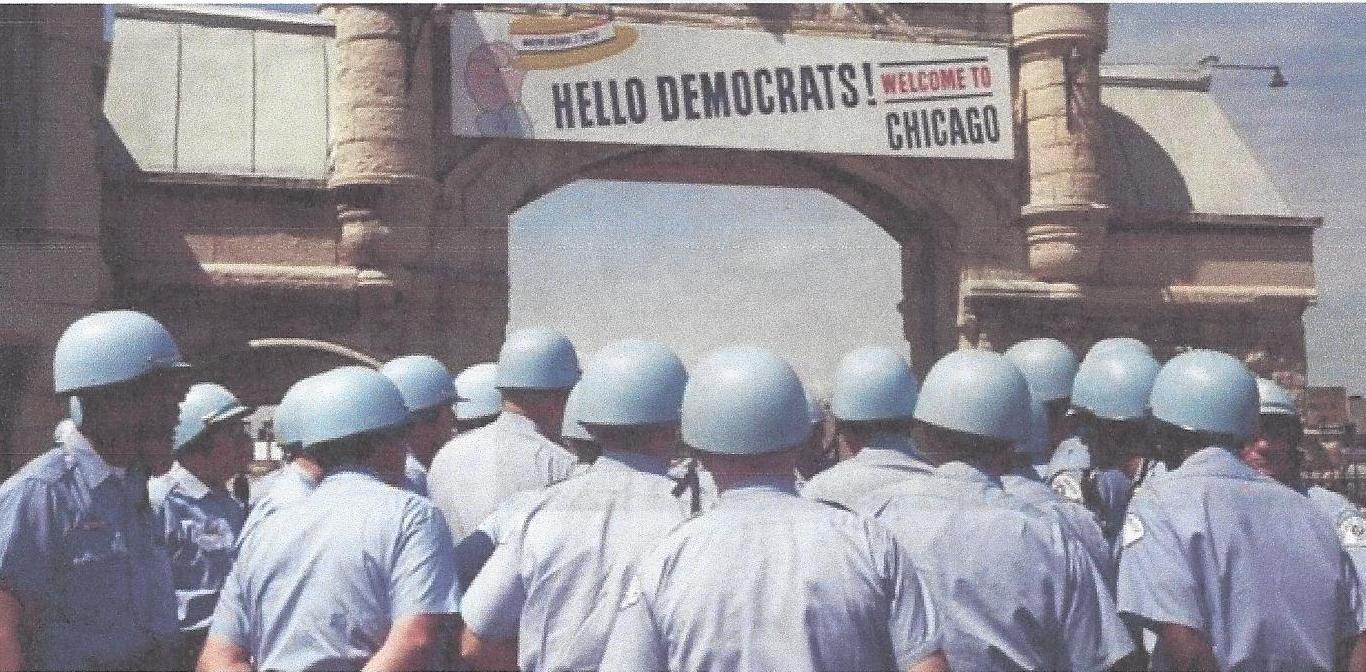
It was the summer after her sophomore year that the Mayor of Chicago took advantage of a transit strike, paralyzed the city by barricading the expressways, called in the National Guard, and laid siege to Chicago before ordering police attacks on innocent citizens – protestors lawfully gathered to exercise their First Amendment rights to freedom of speech and assembly.  He even was heard yelling “F*** You!” on national television on the floor of the Democratic National Convention facing down a McCarthy delegate objecting to the police riot outside.

Convention
The 1968 Convention

Joy was part of Rev. Ralph Abernathy’s Mule Train parading down State Street from the Convention Center (with a permit) to protest the abject poverty on much of Chicago’s South Side.  So was Fred (her first Fred).  Together they met police resistance and violence.

Tomorrow:  Act Two, Scene Two

Act 1 – Scene 2: Organizing the Neighborhood


Act One/Scene Two of A Complex Apology:  Organizing the Neighborhood

SCENE TWO:     Right after moving-in, Joy bought an electric lawn mower and at her first block club party urged the neighbors to borrow it, “Less pollution,” she said.  Within the year, the lawyer on the block who worked for the Environmental Protection League had convinced almost every neighbor that a very nice, albeit not entirely weed-free, lawn could be maintained without using pesticides.  He had made a name for himself by successfully arguing that honeybees have an easement right to fly onto neighboring crop land without being poisoned while performing their necessary cross-pollination duties.  At the time Joy moved-in, he was laying the ground work for another successful law suit holding lawn pesticide companies responsible for the unnatural death of a large number of trees.  He knew a guy who had invented a non-poisonous method for dandelion control.  Everybody on the block got a discount for just trying it.

Their Greenway

While pregnant with their third child, and with two in tow, Joy spent time visiting with the neighbors and convinced us all that our one block stretch of East Como Boulevard could be turned into a pedestrian-only greenway (and later also a community garden) leading to the lake.  Because each side of our one block stretch had an alley behind it, and every neighbor had a garage on the alley, no one had to give up their cars.  The City insisted that emergency vehicles still be able to traverse the vacated street, but soon grass and a walk path replaced the concrete.  The City also agreed to establish permit parking in one section of the parking lot by the lake for occasions when a large number of guests meant not every arrival could fit in the alley.  We all loved it.

Tomorrow:  Act Two